
Call Us:- 1-866-235-8886

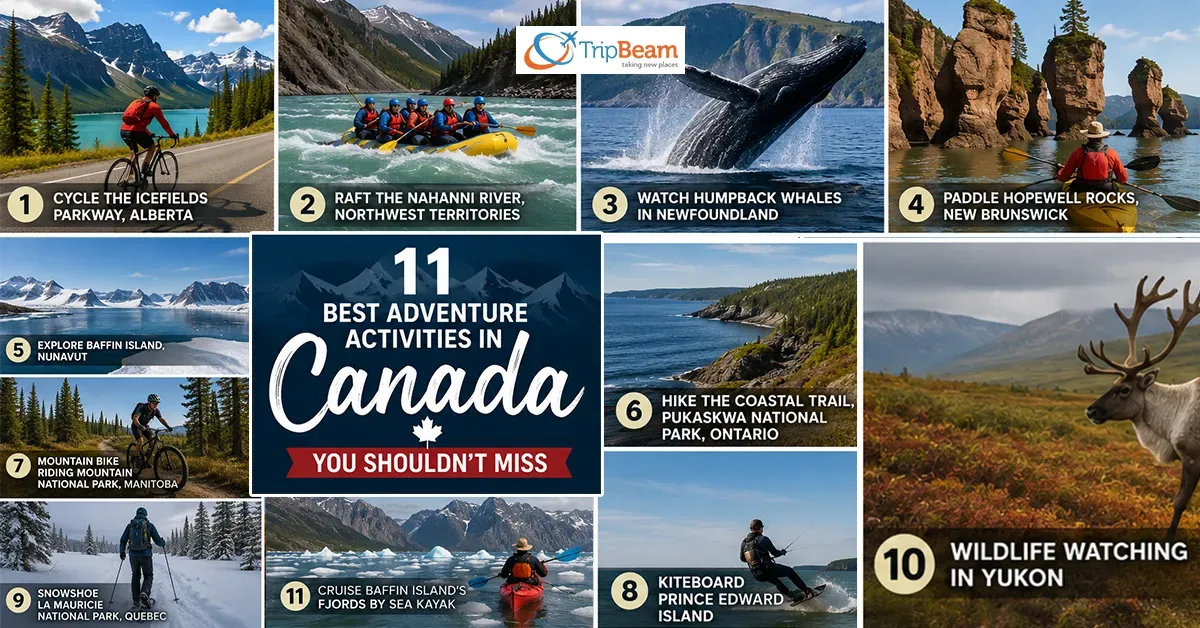
Canada has more than just Toronto, Niagara Falls or Vancouver. What actually makes Canada worth visiting is the wilderness — canyons you can raft, whales breaching off cliffs, glaciers you cycle past, and hiking trails that go for days without seeing another person.
If you’re planning a trip from India, book flights from India to Canada before anything else. Booking early through Tripbeam Canada gives you more route options and cheaper fares, especially during the summer adventure season.
These are the best adventures in Canada that make worth flying halfway around the world for.
Canada’s most challenging and scenic cycling routes unfold along the iconic Icefields Parkway, where riders pass turquoise Peyto Lake and visit the 1,000 foot deep Columbia Icefield. The 232 km highway between Banff and Jasper is widely considered one of the most beautiful roads on earth. And on a bicycle, it’s something else entirely.
Best season – June to September
Nearest airport – Calgary or Edmonton
Travelers flying into Alberta can book flights to Calgary from India on Tripbeam.ca. Most routes connect through Toronto or Vancouver.
There are no roads to Nahanni National Park. Fewer than 1,000 people visit each year. That tells you what you are getting into.
The South Nahanni River plunges almost 100 meters over Virginia Falls which is twice the height of Niagara. Then it carves through four canyons. You fly in by floatplane and spend 7 to 11 days rafting Class II-III whitewater, camping in genuine wilderness. Guided rafting trips cost from CA$9,400 for nine days.
Best season – June to August
Nearest airport – Fort Simpson, NWT
July and August bring peak humpback numbers to Newfoundland and Labrador. June adds a bonus – the rare combination of whales and icebergs on the same trip.
You have two ways to watch. From clifftops at Cape Spear or Signal Hill, you need no boat. Or take a guided tour from Bay Bulls or Trinity Bay and get out on the water alongside the whales. Nesting puffins and migratory icebergs round out what you will see.
Best season – May to September, peak July
Nearest airport – St. John’s
New Brunswick’s Bay of Fundy is home to the world’s highest tides, and Hopewell Rocks is the best place to witness the full spectacle. With highs and lows happening twice a day, you can kayak on the surface one moment and walk the ocean floor the next.
The tidal difference here reaches up to 16 metres which is more than a four storey building. You can plan a full day and time your visit around both high and low tide using the park’s tide tables.
Best season – Mid-May to mid-October.
Nearest airport – Moncton.
Baffin Island is genuinely remote. It is also the only place on this list where you might see polar bears.
Mount Thor rises 1,250 meters straight up — the world’s highest vertical cliff. The island supports rock climbing, skiing in Auyuittuq National Park, sea kayaking, and wildlife that you cannot see anywhere else in North America.
This destination requires serious planning and money. Small ship expeditions depart from Iqaluit and run for multiple weeks. Most operate July to September only.
Best season – July to September
Nearest airport – Iqaluit
Ontario’s largest national park runs along the wildest shores of Lake Superior. The Coastal Hiking Trail covers 60 kilometres of rugged Canadian Shield terrain with beach-side campsites and views that stay with you.
This is not a day hike but a multi-day backcountry trail. So, plan three to five days minimum and book campsites well ahead of the summer season.
Best season – June to September.
Nearest airport – Thunder Bay.
Riding Mountain sits 756 metres above the surrounding plains — surprising for a province most people associate with flatlands. The park has hundreds of kilometres of trails ranging from beginner loops to technical singletrack, alongside lakes, wildlife, and backcountry camping.
Best season – June to October.
Nearest airport – Winnipeg, two hours south.
Strong winds off the Gulf of St. Lawrence and long stretches of sandy beach make PEI one of the best kiteboarding destinations in eastern Canada. The conditions suit both beginners learning on flat water and experienced riders looking for open ocean runs.
Best season – July to September for warmest water and most consistent wind.
Nearest airport – Charlottetown.
La Mauricie in winter is a different world — frozen lakes, snow-covered boreal forest, and complete quiet. The park’s snowshoe trails wind through landscape that looks like it belongs in a wilderness painting. Compass and GPS navigation add a real adventure element for those who want it.
Best season – December to March
Nearest airport – Montreal or Quebec City
Winter in the Yukon brings opportunities for dog sledding, snowmobiling, and ice fishing, while summer opens up hiking trails, canoeing routes, and the chance to watch the Northern Lights from a remote lodge. The Tombstone Territorial Park in the Dempster Highway corridor offers some of the most dramatic Arctic mountain scenery accessible by road anywhere in Canada.
Best season – December to March for Northern Lights and winter sports; June to August for hiking and wildlife.
Sea kayaking the fjords puts you at water level. You see the landscape differently than from a ship.
Clyde River’s fjord walls rise hundreds of meters on both sides. You are paddling underneath them. Narwhals, polar bears, and arctic foxes are common enough that guides point them out casually — like spotting birds elsewhere. This is more intense than ship-based travel and requires genuine kayaking ability.
Best season – July to August
Nearest airport – Clyde River via Iqaluit
Toronto and Vancouver are your entry points from India. From there, you connect domestically to wherever you are actually going.
Summer books fast. If your dates are flexible, May and September run cheaper and less crowded than July and August.
Book last minute flight tickets on Tripbeam Canada and lock in your dates before peak season fills up.
Tell us more details to help better