
Call Us:- 1-866-235-8886

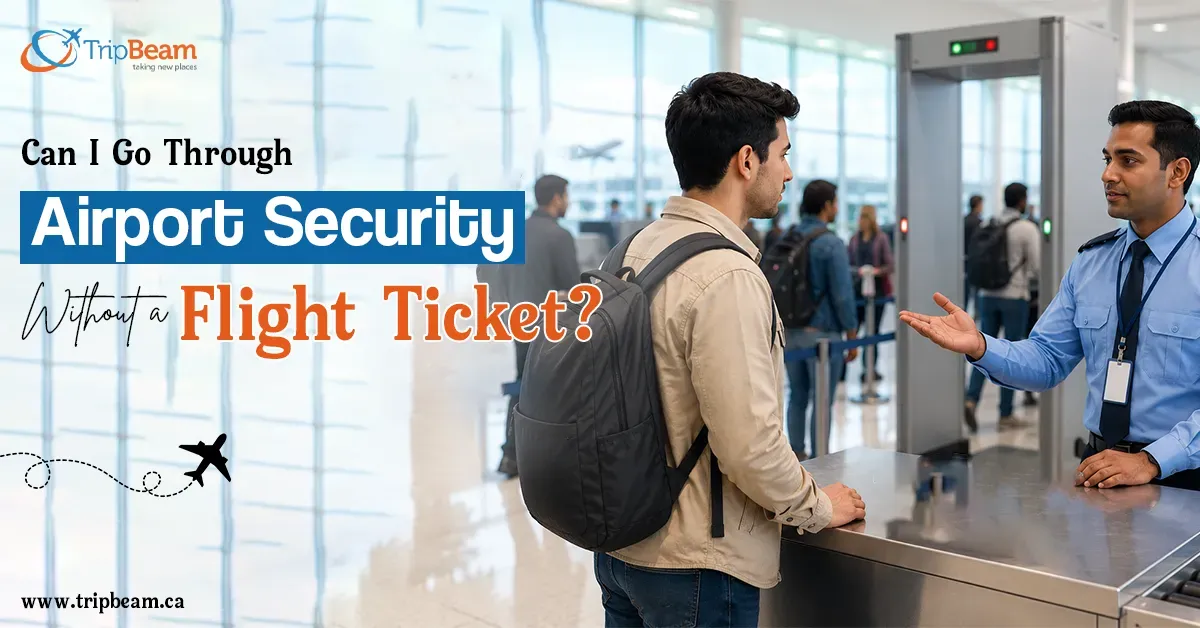
Most of the time, no. It is not possible to go through airport security without a ticket. There are checkpoints for departing passengers, and airports restrict access beyond the security checkpoint for safety reasons.
However, genuine exceptions exist. Some airlines issue gate passes to people helping a child, an elderly parent, or a traveller with a disability get to the gate. And a fast-growing number of airports now run visitor pass programs, letting approved non-travellers into the secure side entirely.
Knowing which applies to you saves a wasted trip, especially if the plan involves meeting someone at the gate. If a trip is still coming together, book affordable flight tickets from Canada to India first. Once it’s confirmed, you’ll know exactly what documents you actually need heading in.
At most airports, no. Checkpoints are reserved for people flying that day. You may still get through if an airline issues you a gate or escort pass, you’re accompanying an unaccompanied minor, you’re assisting an elderly passenger or someone with a disability, you’re part of an approved military family travel situation, or the airport happens to run a visitor pass program.
Outside those exceptions, access is limited to the public areas of the terminal.
No, not to enter the building itself. A ticket only becomes necessary once you’re trying to get past the security checkpoint. Walking into the terminal, browsing check-in counters, grabbing a coffee, or waiting in the arrivals hall, none of that requires proof you’re flying anywhere.
Where people get tripped up is assuming “airport” and “secure departure area” mean the same thing. They don’t. The building is open to the public. Areas beyond the security checkpoint are generally restricted to ticketed passengers, unless a specific exception applies.
Yes, and this is different from clearing security. Anyone can walk into an airport’s public areas, check-in halls, arrival zones, restaurants and coffee shops before the checkpoint, airport hotels, rental car counters. None of that requires a boarding pass.
Reach the actual checkpoint, though, and you generally need either a boarding pass or an approved gate pass to keep going toward the departure gates.
Airlines sometimes issue what’s called a gate pass or escort pass, letting someone accompany a traveller right up to departure. A few common situations are:
None of these are guaranteed. It’s the airline’s call every time, so request one well ahead of your actual airport arrival, not at the counter that morning.
Normally, no, not without the exceptions. TSA only lets ticketed passengers through as a default. The carve-outs are airline-issued gate passes, approved visitor passes, certain military travel programs, and anything else specifically cleared by the airline or airport authority. Even then, everyone entering the secure area, ticketed or not, goes through identical screening.
Canadian airports run similarly. CATSA (the Canadian Air Transport Security Authority) manages screening, and access past the checkpoint is generally limited to people holding a valid boarding pass. Some airlines do issue escort passes for specific situations, such as children flying alone, elderly passengers, and travellers with disabilities, but formal visitor pass programs like the ones spreading across US airports aren’t common in Canada yet. Policies differ by airline and airport, so contact the airline directly if a gate pass looks like something you’ll need.
A valid boarding pass is still the default requirement for clearing airport security, but the exceptions have expanded. Gate passes help family assist a child, an elderly parent, or someone with a disability. Visitor pass programs, now running at over 20 US airports, let approved non-travellers in without a ticket at all.
Check the latest airline and airport policy before you head over, these programs shift often enough that assuming last year’s rules still apply is a real risk.
If you’re traveling on short notice, compare Canada to India last minute flights on Tripbeam Canada and find a departure time for yourself.
A) Usually not. Most airports limit checkpoint access to ticketed passengers, though approved gate passes and visitor pass programs are real exceptions.
A) Yes, for the public areas, check-in, arrivals, shops, restaurants before security. A boarding pass or approved pass is what gets you past the checkpoint itself.
A) Also called an escort pass, it lets an approved non-passenger accompany a traveler through security to the gate, commonly issued for unaccompanied minors, elderly passengers, or travelers with disabilities.
A) Contact the airline directly, well before your travel date. Approval isn’t automatic, and airlines decide case by case.
A) It’s a program letting approved non-travelers into the secure terminal without flying. More than 20 US airports now offer one, including Seattle, Orlando, Detroit, San Francisco, and Nashville, with most requiring advance online registration.
A) Generally no, unless the specific airport or airline has granted special access. Most arrivals happen in the public arrivals area instead.
A) Not typically. Most Canadian airports restrict checkpoint access to ticketed passengers, and escort passes exist for specific situations, but formal visitor pass programs remain uncommon.
A) Possibly. If they need help navigating the airport, the airline may issue a pass, contact them ahead of time since approval depends on the airline's own policy.
A) Yes, valid government-issued photo identification is required before you're allowed past the checkpoint with a gate pass.
Tell us more details to help better