
Call Us:- 1-866-235-8886

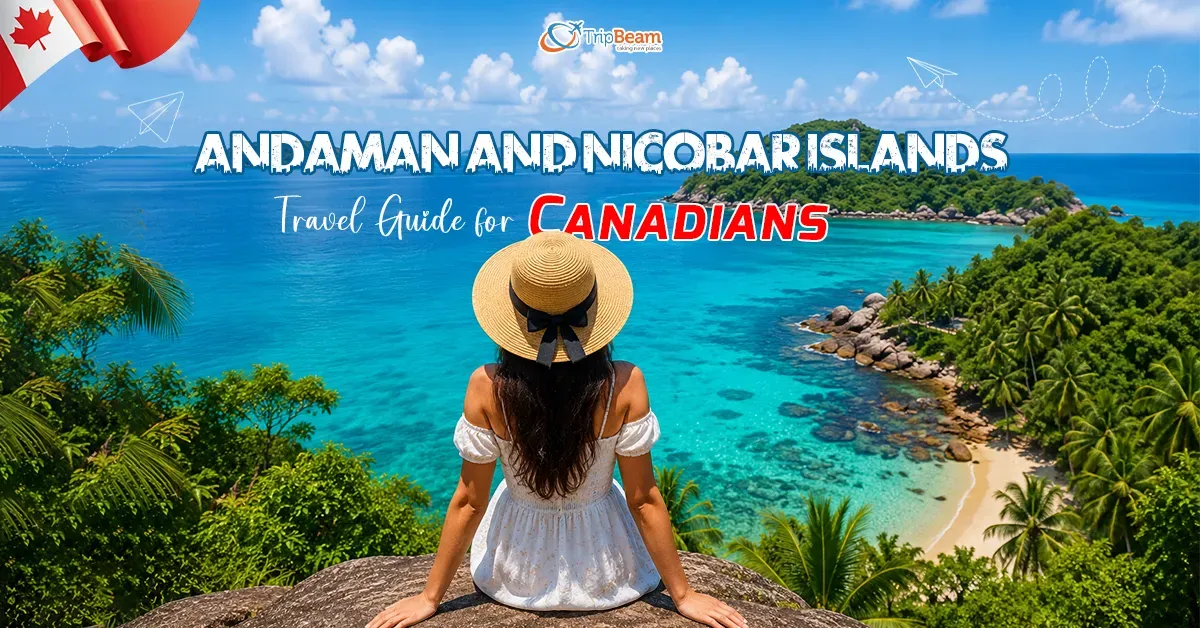
Most Canadians flying to India head straight to Delhi, Mumbai, or to see family. The Andaman and Nicobar Islands rarely make the itinerary and that’s exactly the reason they’re worth adding to your India trip. Fewer crowds, cleaner beaches, and water that actually looks the way travel photos promise it will.
This guide covers everything Canadian travellers need to plan an Andaman trip – best time to visit, how to get there from Canada, permit rules, and where to actually spend your time.
November through April is the best time to visit Andaman and Nicobar islands. The weather is dry, the ocean is calm, and visibility underwater is at its best. All these things are important if you’re diving or snorkelling.
December and January are busy season, so expect higher hotel or accommodation prices and more tourists at the popular beaches.
May brings the tail end of good weather before the monsoon arrives. June through September sees heavy rainfall, rough seas, and several water activities suspended entirely. If your Canada to India trip falls in these months, Andaman is best saved for another visit.
There are no direct flights from Canada to Port Blair (the main hub of the Andaman Islands). The journey involves two legs; your international flight from Canada to a major Indian city, followed by a domestic connection to Port Blair.
The most common and reliable connections are through Chennai and Kolkata, both of which have multiple daily flights to Port Blair. Delhi also has service but with fewer daily departures. If your international flight lands in Delhi, factor in the possibility of an overnight stay before your onward connection.
Tripbeam Canada’s team books the full Canada to Andaman itinerary in one go, international and domestic legs together, so you’re not managing two separate bookings across different airlines. Book cheap flights from Canada to India and mention Andaman when speaking to our travel team for a combined itinerary.
All visitors to the Andaman Islands require an Andaman Restricted Area Permit (RAP). Without it, you cannot move freely between islands.
For Indian citizens, the permit is issued on arrival at Port Blair airport against a valid government issued photo ID: Aadhaar, PAN card, or driving license.
For Canadian passport holders and other foreign nationals, the process is different. You need a valid Indian visa first, and it must not carry the restriction “Entry to restricted areas not permitted.” The RAP itself should be arranged in advance through your travel agent or the Deputy Commissioner’s office before you land. Arriving without pre-arranged documentation as a foreign national can cause delays at the airport.
The permit is issued on arrival at Port Blair airport and is valid for 30 days for most nationalities. Carry it with you at all times, you will be asked for it at checkpoints across the islands.
Havelock Island (Swaraj Dweep)
The most visited island and for good reason. Radhanagar Beach ranks among Asia’s best beaches. It is long, clean, and relatively uncrowded outside the busy season. Elephant Beach nearby is the best spot for snorkelling and water sports.
Neil Island (Shaheed Dweep)
Quieter than Havelock and popular with travellers who want the beach vibe without the crowds. Laxmanpur Beach at sunset is one of the better views in the archipelago.
Cellular Jail, Port Blair
A former British colonial prison that held India’s independence fighters. It is referred to locally as Kala Paani. The evening light and sound show runs daily and is worth attending for the historical context alone.
Mahatma Gandhi Marine National Park
Established to protect the region’s coral ecosystem, this park spans multiple islands near Wan door Beach. Glass bottomed boat tours and snorkeling give you direct access to the coral and marine life without diving certification.
Chidiya Tapu
Known as Bird Island, roughly 25 km from Port Blair. Dense mangroves, forested trails, and one of the best sunset viewpoints in the islands. Less commercial than Havelock and worth a half day trip.
The Andaman Islands have strict environmental rules that are enforced seriously, not just written on signs.
Plastic bags are banned across most of the islands and fines are imposed on the spot. Littering carries heavy penalties. Overnight stays, camping, and bonfires on beaches are prohibited. Collecting corals or shells either dead or alive is illegal and can result in huge fines.
If you visit areas near protected tribal reserves, photography of tribal communities without explicit consent is prohibited. This applies to the Jarawa and Sentinelese territories in particular as these are active restricted zones, not tourist attractions.
Andaman is reasonable by Canadian standards. A mid range trip covering accommodation, meals, and water activities runs approximately ₹4,000 to 7,000 per day (roughly CA$58 to 101). Peak season adds 20 to 30% to accommodation costs.
The main expense is getting there. Tripbeam’s Canada–India fares are updated daily — booking your international leg early and adding the domestic Port Blair connection through our team typically costs less than managing both separately.
So, if you’re planning a trip from Canada to India that includes Andaman? Talk to Tripbeam support team, we handle the international and domestic legs together so the logistics don’t fall on you.
A) Yes. Canadian passport holders need a valid Indian visa to enter the Andaman Islands. The visa must not include the restriction “Entry to restricted areas not permitted.” The Andaman RAP permit is issued separately on arrival in Port Blair.
A) Most travelers spend 5 to 7 days, which allows time in Port Blair plus visits to Havelock and Neil Island. A 10 day trip gives you more flexibility to explore the less visited northern islands.
A) Book your international flight from Canada to India early through Tripbeam.ca and add the domestic Port Blair connection at the same time. Bundling both legs through one agency avoids the premium of booking domestic Indian flights last minute as an add-on.
A) Yes. It’s one of India’s safer destinations for solo travelers including women. The islands are small, well-policed, and tourism infrastructure is well established on the main islands.
Tell us more details to help better